
Customer Success
Top AI Customer Management Tools for Agencies and SaaS
Managing clients is essential for agencies and SaaS companies. However, many teams still use tools that do not work well together. This can create problems with tracking work and keeping customers happy. AI customer management tools bring data into one system. They study customer behavior and show patterns. They help staff act early when a client is at risk. They also make routine work faster and easier.
Why AI Customer Management Tools Matter for Agencies and SaaS?
AI tools change how teams manage customers. They score leads, predict churn, suggest the next action, and help personalize emails and messages. This means faster responses. It means better customer retention. It also means stronger revenue growth for the business. Some key uses include:
- Lead scoring: AI checks data and shows which leads are most likely to convert.
- Personal outreach: Messages are based on customer needs and history.
- Predictive analytics: AI warns when a customer may leave.
- Customer support: Chatbots answer common questions instantly.
These features make AI CRM software indispensable for businesses aiming to scale efficiently and maintain strong customer relationships.

AI CRM software dashboard on a laptop screen
Top AI Customer Management Tools
Several AI CRM software tools stand out for their innovative features and ease of integration with SaaS platforms. Here are some of the top options:
1. Salesforce Einstein
Salesforce Einstein is an AI layer built into the Salesforce CRM platform. It offers predictive lead scoring, opportunity insights, and automated data entry. Its AI capabilities help sales reps focus on high-value activities and close deals faster.
- Key features: Automated data capture, AI-powered recommendations, natural language processing.
- Best for: Large SaaS companies that need a comprehensive CRM solution.
2. HubSpot CRM with AI Add-ons
HubSpot CRM integrates AI tools that enhance marketing automation, lead nurturing, and customer service. Its user-friendly interface and robust analytics make it a favorite among growing SaaS businesses.
- Key features: AI chatbots, predictive lead scoring, and email personalization.
- Best for: Small to medium SaaS companies looking for scalable CRM.
3. Zoho CRM Plus
Zoho CRM Plus combines AI with multichannel customer engagement. Its AI assistant, Zia, provides sales predictions, anomaly detection, and sentiment analysis to improve customer interactions.
- Key features: AI-powered sales assistant, sentiment analysis, workflow automation.
- Best for: SaaS companies seeking an all-in-one CRM and customer experience platform.
4. Freshworks CRM (Freshsales)
Freshworks CRM uses AI to automate lead scoring, deal insights, and customer segmentation. Its intuitive design and AI-driven workflows help SaaS teams streamline sales and support processes.
- Key features: AI-based lead scoring, predictive contact scoring, workflow automation.
- Best for: SaaS startups and mid-sized companies.
5. Aartha AI CRM
Aartha AI CRM is a specialized platform for leveraging AI to deepen customer insights and automation. It offers advanced analytics, personalized engagement, and seamless integration with SaaS products.
- Key features: AI-driven customer insights, automated workflows, and real-time analytics.
- Best for: Agencies and SaaS companies focused on data-driven customer management.
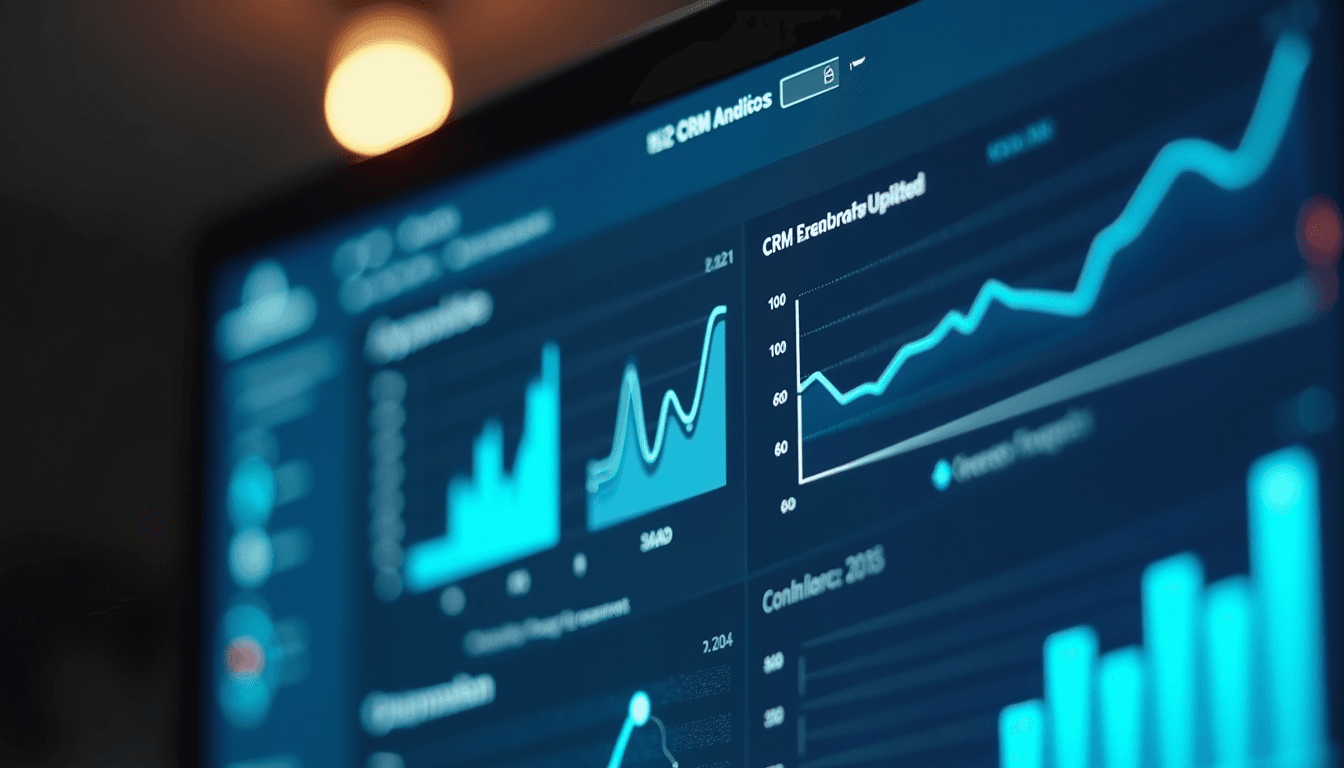
Detailed AI analytics on the CRM software screen
What are the Three Commonly Used Examples of AI in CRM?
AI integration in CRM systems typically focuses on three main applications that drive efficiency and customer satisfaction:
1. Predictive Lead Scoring
AI algorithms analyze historical data to score leads based on their conversion likelihood. This helps sales teams prioritize high-potential prospects and allocate resources effectively.
2. Chatbots and Virtual Assistants
AI-powered chatbots handle routine customer inquiries, provide instant support, and escalate complex issues to human agents. This improves response times and reduces support costs.
3. Sentiment Analysis
AI tools analyze customer communications to detect sentiment and mood. This insight helps businesses tailor their responses and identify at-risk customers before churn occurs.
These examples demonstrate how AI enhances CRM functionality by automating tasks and providing actionable insights.

Customer sentiment analysis on a digital tablet
How to Choose the Right AI CRM Software Tool for Your SaaS Business
Selecting the best AI CRM software tool depends on your business needs, size, and budget. Here are some practical tips to guide your decision:
- Identify your goals: Determine whether you need better lead management, customer support automation, or advanced analytics.
- Evaluate integration capabilities: Ensure the CRM integrates smoothly with your existing SaaS products and tools.
- Consider scalability: Choose a platform that can grow with your business and handle increasing data volumes.
- Assess ease of use: A user-friendly interface reduces training time and increases adoption among your team.
- Check AI features: Look for AI functionalities that align with your priorities, such as predictive analytics or chatbot support.
- Review pricing models: Compare subscription costs and feature tiers to find a solution that fits your budget.
By carefully assessing these factors, you can select an AI CRM software tool that maximizes your SaaS business’s efficiency and customer satisfaction.
Maximizing the Benefits of AI CRM Software Tools
To get the most out of your AI CRM software, consider these actionable recommendations:
- Train your team: Ensure your sales and support teams understand how to use AI features effectively.
- Regularly update data: Accurate and up-to-date customer data improves AI predictions and recommendations.
- Customize workflows: Tailor automation rules and AI settings to match your unique business processes.
- Monitor performance: Use CRM analytics to track AI impact on sales, customer retention, and support metrics.
- Stay informed: Keep up with AI advancements and CRM updates to leverage new capabilities.
Implementing these strategies will help your business harness the full power of AI CRM software tools.
Conclusion
AI is changing how agencies and SaaS companies manage customers. These tools save time and improve insights. They also help protect revenue and keep customers loyal. Adopting the right AI tool is a step toward stronger growth and a more stable future.
The Future of AI in Customer Management
As we look ahead, the role of AI in customer management will only grow. Companies will increasingly rely on AI to enhance their operations. This shift will lead to more personalized customer experiences and improved efficiency.
Embracing Change
Adapting to AI technologies is not just a trend; it's a necessity. Agencies and SaaS companies must embrace these changes to stay competitive. The integration of AI will allow businesses to anticipate customer needs better and respond proactively.
Continuous Learning
The landscape of AI is ever-evolving. Staying updated on new developments is crucial. Regular training and workshops can help teams leverage the latest AI tools effectively. This commitment to continuous learning will ensure that your business remains at the forefront of customer management.
Building Stronger Relationships
Ultimately, the goal of using AI in customer management is to build stronger relationships. By understanding customer behavior and preferences, businesses can create tailored experiences. This approach not only enhances customer satisfaction but also fosters loyalty.
In conclusion, the future of AI in customer management is bright. By adopting the right tools and strategies, agencies and SaaS companies can thrive in this new landscape. The journey towards AI integration may be challenging, but the rewards are well worth the effort.
Turn customer signals into intelligence.
See how Aartha builds durable customer memory from the tools your team already uses.
Book a demo